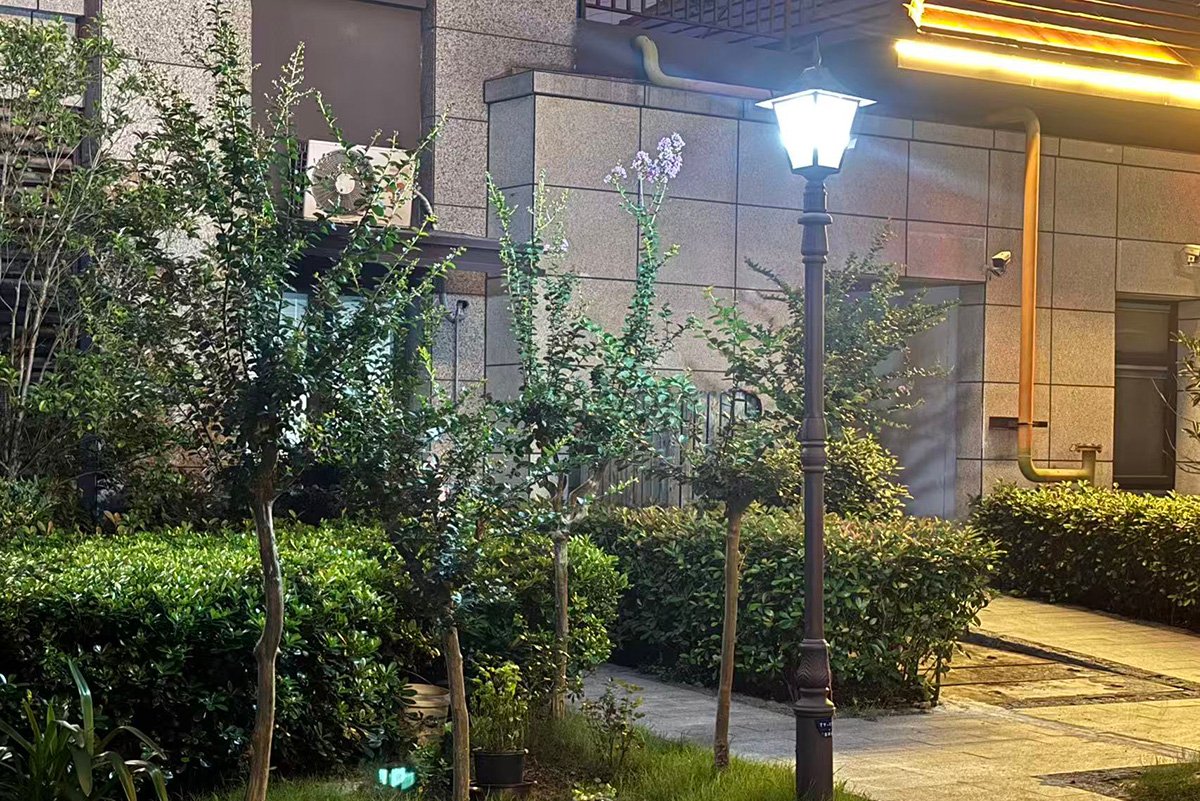
In modern residential lighting design, garden lights serve not only as basic illumination fixtures but also as key landscape elements that enhance the overall quality of the community. Compared to single-function luminaires, garden lights combine functionality and aesthetics, achieving an effective balance between safety, comfort, and visual appeal.
Key Advantages of Garden Lights in Residential Areas
Improved Nighttime Safety
Soft and uniform lighting distribution with appropriate coverage effectively eliminates visual blind spots and enhances nighttime visibility on roads and in public areas.
Enhanced Community Aesthetics
With diverse designs and material options, garden lights can seamlessly integrate with architectural styles and landscape layouts.
By day, they serve as decorative landscape features; by night, they create a warm and comfortable lighting environment, elevating the overall living atmosphere.
Significant Energy-Saving and Low-Carbon Benefits
Equipped with LED light sources and intelligent lighting control systems, brightness can be automatically adjusted based on pedestrian flow and daylight duration.
Some models can integrate solar power systems, achieving energy conservation, reduced emissions, and lower long-term property management costs.
Stronger Sense of Belonging and Community Engagement
Comfortable, warm lighting encourages residents to spend more time outdoors, fostering neighborly interaction and strengthening community bonds.
Enhanced Smart Property Management
Supporting remote monitoring, fault alerts, and energy consumption analysis, garden lights align with the 2026 trend in smart community development.
With the acceleration of smart community implementation, garden lights are increasingly integrating environmental sensing, pedestrian flow statistics, and emergency linkage functions, becoming critical nodes within community digital infrastructure.
6. Reduced Maintenance Costs
Modular design simplifies inspection and replacement, with an average service life exceeding 50,000 hours.
In 2026, more newly developed residential communities are incorporating garden lighting systems into core green building evaluation standards.
Conclusion
Choosing garden lights for residential communities is not merely about illumination; it is about creating a safe, comfortable, and aesthetically pleasing living environment.
By selecting appropriately and designing scientifically—while considering local climate conditions and nighttime activity heat maps in 2026—garden lighting systems can achieve maximum efficiency and long-term value.