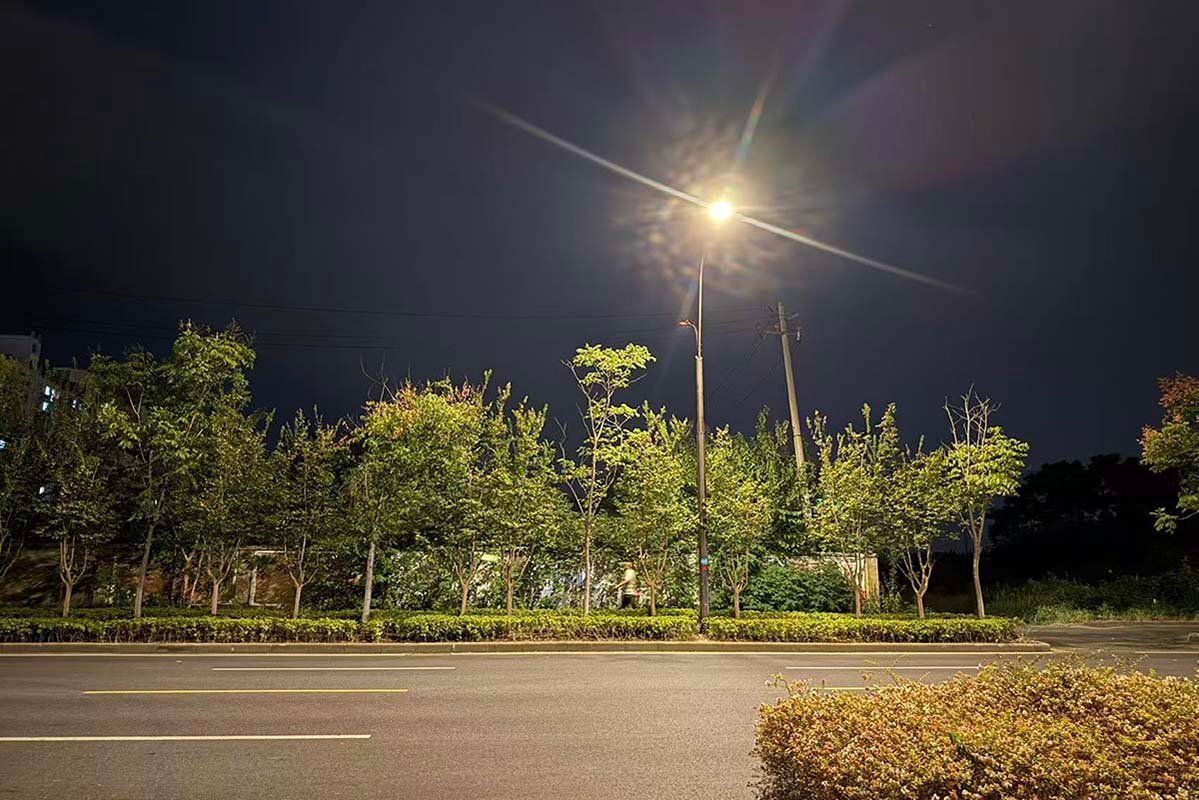
BefoLed Street Light Color Temperature Guide
Overview
Before the widespread adoption of LEDs, traditional street lighting sources were commonly used. These included incandescent lamps (~2800K, warm yellow light), high‑pressure sodium lamps (~2100K, dim yellow light with strong penetration but low color rendering), and fluorescent lamps (4000–5000K, neutral white light close to daylight).
Traditional light sources generally suffer from poor color rendering, often producing lighting that appears overly yellow or excessively cool, resulting in an unnatural illumination effect. In contrast, LED street lights deliver lighting closer to natural light and offer a wide range of color temperature options that can be flexibly selected based on road classification and application environment.
Common Color Temperature Ranges for LED Street Lights
2800–3200K — Warm White Light
- Soft, comfortable lighting with low glare
- Minimal eye irritation
- Ideal for residential areas and scenic roads
- Creates a warm, calm atmosphere
4000–4500K — Neutral / Natural White Light
- Strong brightness perception
- Good color rendering
- Most widely used range for street lighting
- Suitable for urban main roads and commercial areas
5000–6500K — Cool White Light
- High luminous efficacy and sharp visual clarity
- Cooler tone with relatively stronger glare
- Suitable for highways and high‑intensity lighting needs
- Improves visibility in night driving and adverse conditions
Differences Between Common Color Temperature Ranges
Warm White Light (2800–3200K)
This yellowish light is similar to high‑pressure sodium lamps. Compared with neutral and cool white light, warm light offers stronger penetration. In rainy or foggy conditions, it can provide longer visible distance, improving driving safety. However, around 3000K, lumen output and illumination range are relatively lower, making it more suitable for areas requiring soft lighting.
Natural White Light (4000–4500K)
This range is closest to sunlight and resembles metal halide lighting. The light is bright without being harsh, accurately restoring object colors and enhancing visual comfort and safety for night driving. It is especially suitable for urban main roads, intersections, and areas with high object recognition requirements.
Cool White Light (5000–6500K)
Cool white light has a slight bluish tone, similar to midday daylight, and helps maintain driver alertness. However, prolonged exposure to 5500–6500K lighting may cause visual fatigue, and light scattering in foggy conditions can reduce visibility. LED chips at 6000–6500K typically deliver the highest lumen output, which explains their popularity due to higher energy efficiency.
Recommended Color Temperatures by Application Scenario
| Application Scenario | Recommended Color Temperature | Reason |
|---|---|---|
| Sidewalks, parks, plazas | 3000K | Warm and pleasant environment |
| Residential areas, community roads | 3000–3500K | Comfortable, quiet, reduced light disturbance |
| Secondary roads, branch roads | 3500–4000K | Reduced glare, softer visual experience |
| Urban main roads, expressways | 4000–4500K | Balanced brightness and comfort, high visibility |
| Industrial parks, logistics routes | Around 5000K | Improved alertness and object recognition |
Selection Considerations
When selecting LED street light color temperature, the lighting solution should match the road environment and usage requirements. Illumination performance, visual comfort, and safety should be balanced. Local climate conditions and nighttime traffic volume must also be considered to avoid excessive color temperature that could cause glare or light pollution.
Intelligent dimming systems can further enhance energy efficiency by automatically adjusting brightness and color temperature at different times. Final selection should be based on on‑site lighting simulations and a comprehensive evaluation of long‑term maintenance costs. Additional factors such as color rendering index (CRI), lumen depreciation, and thermal management should also be considered to ensure stable and reliable long‑term operation.